------News Center
Infectious Bronchitis
(1) Clinical Symptoms
The disease is divided into respiratory tract type, renal type, glandular stomach type and reproductive tract type.
1. Respiratory Type
Chicks (under 5 weeks old): Sick chicks show lethargy, withdraw their heads, close their eyes and sleep, droop their wings, have ragged and matted feathers, are afraid of cold and tend to huddle together, have runny noses and tears, sneeze, stretch their necks and open their mouths to breathe, and produce wheezing sounds with breathing. Some chicks may also experience facial swelling.
Laying hens: In addition to respiratory symptoms, laying hens experience delayed onset of egg production and decreased egg production, with a wheezing sound associated with egg production. Some chicks may also experience facial swelling. The number of thin-shelled, discolored, deformed, "pigeon" or rough-shelled eggs increases by 25% to 50%. The egg white is thin and watery, easily separating from the yolk, and the albumen adheres to the shell membrane. This reduces the hatchability of eggs and makes it difficult to restore egg production to its original level.
Infectious respiratory bronchitis in one-day-old chicks can cause permanent damage to the oviduct. Infecting chicks between 10 and 18 days old can result in a high incidence of false pullets, which is one of the reasons why laying hens fail to lay or have a peak egg production.
2. Glandular Stomach Type
The body is emaciated, and the chest and leg muscles are atrophied and pale.
30% of the dead chickens have enlarged kidneys that are pale.
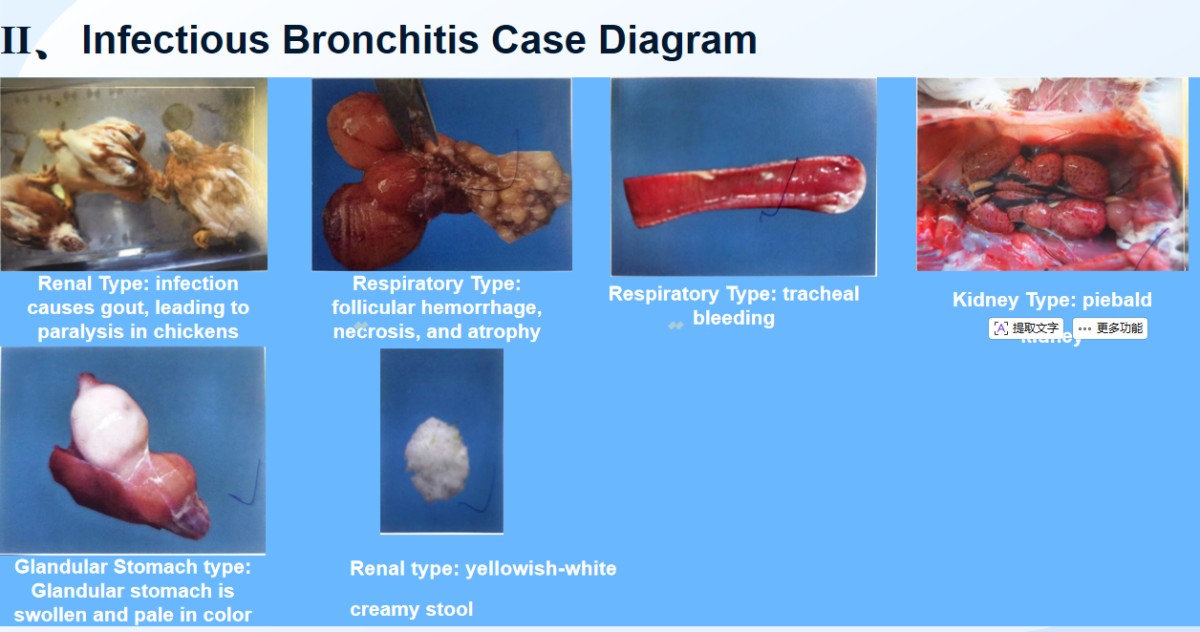
Tracheal congestion or bleeding, with mucus inside. The glandular stomach is swollen like a ping-pong ball, the stomach wall is thickened, the glandular stomach mucosa is bleeding or ulcerated, the glandular stomach papilla is swollen, bleeding or the papilla disappears (the lesions are similar to those of infectious adenomyotic gastritis), the junction between the stomach and the gizzard is thinned, and in severe cases, perforation occurs.
Intestinal mucosal bleeding, especially duodenal bleeding, is the most serious.
3. Reproductive Tract Type
Oviduct edema and cysts (water bag-like), some oviducts are underdeveloped and atrophic: follicles are congested, bleeding, degenerated, atrophic, and even necrotic.
Kidney enlargement, large amounts of urate are deposited in the ureter.
How to Quickly Identify Infectious Bronchitis ?
Respiratory Symptoms: Sick chickens may experience coughing, sneezing, tracheal rales, and difficulty breathing.
Abnormal Egg Production: Typical manifestations include decreased egg production, thinning or deformed eggshells (such as soft-shell eggs).
Kidney Disease: Some strains can cause kidney enlargement and urate deposition ("piebald kidney").
Tracheal lesions: There is mucus or cheesy exudate in the trachea and the mucosa is congested.
Air sac Inflammation: Opacification and thickening of the air sac may occur in secondary infection
Treatment Plan for Infectious Bronchitis
1.Isolation and Disinfection:
Isolate the sick chickens immediately to prevent the virus from spreading.
Enhanced Disinfection:
Spray the chicken coop with iodine preparations (such as povidone-iodine 1:200) or potassium persulfate once a day for 5 consecutive days.
Feces and bedding materials must be disposed of in a harmless manner (incineration or deep burial).
2.Feeding and management adjustments
Improve ventilation: Reduce ammonia concentration (<10ppm) to avoid irritating the respiratory tract.
Keep the temperature stable (30-32℃ for chicks, 18-22℃ for adults) and humidity at 60%-70%.
Soften feed: During outbreaks, switch to wet feed to reduce respiratory irritation during feeding.
3.Treatment Plan
Tylosin + Doxycycline: To control secondary bacterial infections (such as mycoplasma and Escherichia coli), administer via drinking water (tylosin 25 mg/L + doxycycline 20 mg/L, for 5 consecutive days).
Aminophylline or bromhexine oral solution: Add antipyretics (paracetamol), antivirals (Xinrujing, Antiviral No. 8), and boost immunity.
1)Anti-stress and immune enhancement
Vitamins relieve stress and promote recovery.Astragalus polysaccharide (0.2g/L drinking water): enhances immunity and inhibits viral replication.
2)Kidney protection (for renal type IB)
Reduce dietary protein (≤16%) to decrease urate deposition.
Sodium bicarbonate (0.1%~0.2% in drinking water): Alkalizes urine and alleviates kidney swelling.