
------News Center
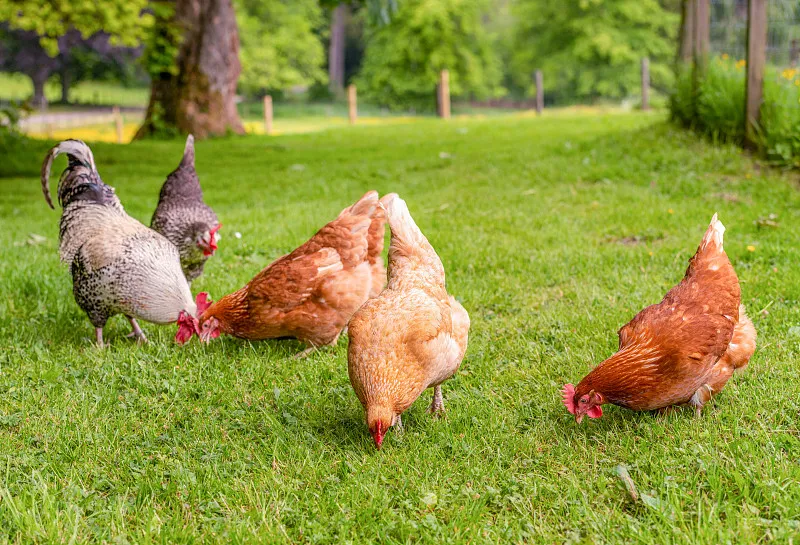
It always starts the same way: a sudden temperature drop, a ventilation adjustment made too late, a chilly night in an under-heated brooding house. For a few days the flock looks almost normal — a little sneezing, a few birds with ruffled feathers, feed intake slightly down. Then it moves. Within a week to ten days, poultry respiratory disease has descended from the upper airway into the air sacs, and by the time producers see real mortality, airsacculitis in broilers is already established — with irreversible damage, condemned carcasses, and losses that no treatment can recover. The critical insight for every poultry producer is this: the chain from cold stress to air sac disease is predictable, and every link can be interrupted, but only if action happens early.
Step One: Cold Stress Silently Resets the Whole Flock
Chickens are remarkably sensitive to thermal change. Their thermoneutral zone is narrow, and when ambient temperature falls below it, the bird must burn energy just to stay warm — energy that comes directly out of production. Research comparing cold-stressed broilers with birds reared under thermoneutral conditions found feed intake down 22.05%, body weight gain down 38.32%, and feed conversion ratio worsened by 22.47%. That is a flock that is no longer profitable, and the birds are not yet visibly sick. Cold stress also triggers a full physiological stress response: the bird releases corticosterone and catecholamines, redistributes blood flow away from peripheral tissues, and initiates deep shifts in metabolism, gut function, and the microbiome. Cold conditions additionally raise metabolic oxygen demand and pulmonary arterial pressure, a pathway that increases ascites incidence and further compromises respiratory efficiency. This is the moment the disease chain begins — weeks before a single bird dies.
Step Two: The Respiratory Barrier Breaks and Immunity Falls
The chicken respiratory tract depends on a physical barrier — the mucociliary escalator — and on mucosal immunity to trap and clear inhaled pathogens, and cold stress attacks both. Chilling reduces mucociliary clearance, thickens mucus, and damages the respiratory epithelium, while elevated corticosterone induces oxidative stress and suppresses immune function, reducing the bird's capacity to mount a rapid local response. The environmental factors that accompany cold weather make matters worse: producers responding to cold by reducing ventilation trap ammonia, carbon dioxide, dust, and moisture inside the house, and ammonia directly damages the respiratory epithelium and paralyzes cilia while dust carries bacteria deep into the airway. The result is a flock whose defenses are down precisely when the challenge is highest — which is why environmental management in poultry houses is inseparable from respiratory health.
Step Three: The "Chicken Cold" Stage — Easy to Ignore, Costly to Miss
With barriers compromised, opportunistic pathogens establish infection in the upper respiratory tract. This is the stage producers describe as a "chicken cold," and it is the moment when intervention is still cheap.
The warning signs are unmistakable once you know what to look for:
Sneezing, sniffling, and head shaking, with nasal discharge and watery or foamy eyes
Tracheal rales — abnormal breathing sounds audible when the house is quiet
Ruffled feathers, huddling, and reduced activity
A measurable drop in feed and water intake
Many producers dismiss these signs as minor. They are not. This is the stage where Mycoplasma gallisepticum (MG) and viral respiratory pathogens become firmly established,
and where chronic respiratory disease (CRD) takes hold in the flock.
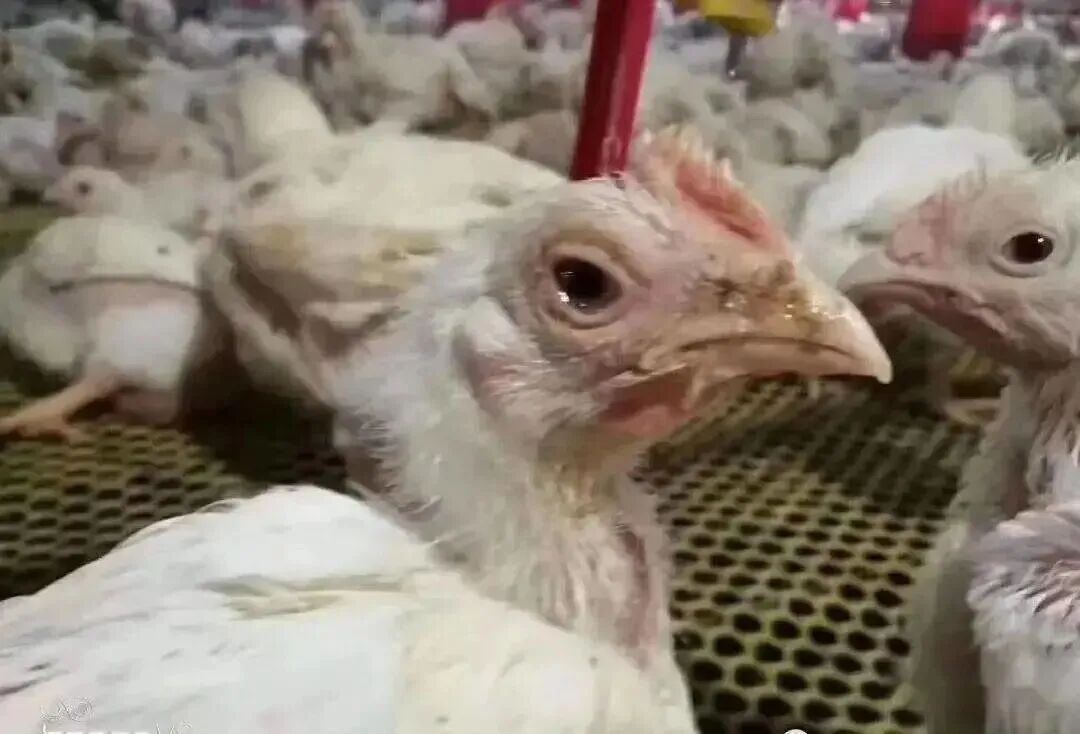
Step Four: Descent into the Air Sacs — Airsacculitis
If the upper respiratory infection is not controlled, pathogens migrate downward to the air sacs — thin, poorly vascularized, and with limited immune surveillance.
Secondary bacteria, especially Escherichia coli, invade and produce airsacculitis: thickened, cloudy, caseous air sacs with fibrin deposits. This is no longer a manageable respiratory irritation;
it is systemic disease, and the production cost is severe. In broilers, MG infections reduce weight gain by 20–30% and worsen feed conversion by 10–20%, while affected flocks show poor uniformity,
delayed market weight, higher medication costs, and escalating mortality. At slaughter, air sac lesions lead directly to carcass condemnation — a total loss on every condemned bird.
Research and field experience consistently identify poor house ventilation as one of the leading contributors to high airsacculitis condemnation rates, confirming that this outcome is largely preventable.
Step Five: Mass Mortality — and the Losses Nobody Can Reverse
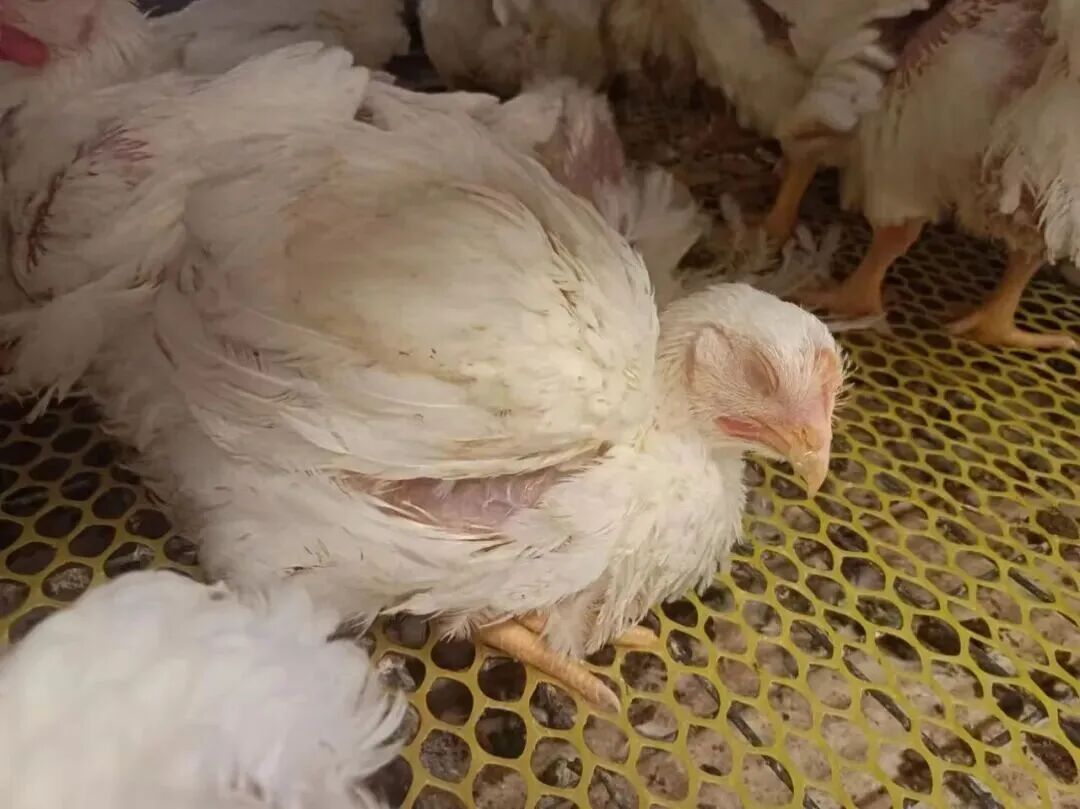
Once airsacculitis advances to systemic infection, mortality climbs sharply and birds become severely dyspneic, cyanotic, and unresponsive to treatment.
By the time a producer is counting dead birds by the dozen, several compounding losses have already accumulated: reduced growth, destroyed feed efficiency,
elevated medication costs, carcass condemnations, and lost income across the entire flock.
In the United States alone,
economic losses associated with MG infection have exceeded $150 million annually — and that figure does not account for the productivity lost in infected flocks that never reach confirmed outbreak status.
Why Waiting Is the Most Expensive Decision
Respiratory disease in chickens is a continuum, not an event, and every stage is cheaper to address than the next. Cold stress requires no medication, only better environment and nutrition. A compromised barrier requires immune support, not antibiotics. Upper respiratory infection requires early, targeted intervention. But once air sacs are permanently damaged and systemic infection is established, no treatment restores the flock to its production potential — which is why producers who focus on prevention rather than reaction spend dramatically less and lose dramatically less.
Building a Multi-Layer Defense Against the Cold-Stress Chain
Breaking the chain requires action at every link, with environment, immunity, and nutrition working together. Verify brooding temperatures at bird level rather than ceiling height, adjust minimum ventilation to maintain warm, fresh, dry air without chilling birds, manage litter moisture, control ammonia, and check night-time temperatures specifically — because that is when cold stress occurs and when nobody is watching. Reduce handling and transport stress during cold periods, and complete vaccination programs on schedule so birds enter cold weather with established immunity rather than during peak challenge. Monitor intake daily, because a small decline in feed or water consumption is the earliest measurable signal that the chain has already started. Finally, support the bird's own defenses nutritionally — the third and most consistently underestimated layer, and where Vibovdelivers.
Vibov: Natural Nutritional Support for Respiratory Resilience
Vibov develops natural feed additives for poultry formulated to reinforce the physiological foundations of respiratory health. Rather than replacing good management, Vibov products help birds express their full genetic potential when environmental challenge is highest.
Immune Support and Respiratory Tract Protection
Vibov's poultry immune booster delivers plant-derived polysaccharides, flavonoids, and polyphenols that support both innate and adaptive immunity, helping birds maintain immune competence and mount faster, more effective responses to respiratory challenge and vaccination even when corticosterone is suppressing immune function. Complementing this, Vibov's respiratory support formulation for poultry includes aromatic plant compounds — including oregano-derived essential oils and other phytogenic actives with documented antimicrobial and anti-inflammatory activity in the airway — that support respiratory mucosal integrity, normal ciliary function, and reduced inflammatory damage in the trachea and upper airway. Protecting this first line of defense is the most effective way to stop pathogens from ever reaching the air sacs.
Antioxidant Defense and Gut Foundation
Cold stress drives oxidative damage that undermines both immunity and tissue repair, and Vibov's antioxidant poultry supplement provides a multi-compound antioxidant network — including natural vitamin E, selenium, and plant polyphenols — that helps neutralize reactive oxygen species, protect epithelial tissue, and support recovery after stress events. Because a substantial share of immune capacity sits in the gut, and cold stress alters gut function and microbial balance, Vibov's gut health supplements for poultry also support intestinal barrier integrity and a balanced gut microbiota, maintaining nutrient absorption and immune readiness through cold periods, since a healthy gut is a prerequisite for a strong respiratory defense.
Growth Efficiency, Compliance, and Global Reach
When cold stress cuts feed intake by more than a fifth and body weight gain by nearly two-fifths, profitability depends on how efficiently the flock uses every gram of feed. Vibov's formulations support feed conversion efficiency and growth uniformity during and after stress events, helping flocks recover the performance losses that compound so quickly in winter. All Vibov poultry products are 100% natural, antibiotic-free, and residue-free, with no withdrawal periods, making them fully compatible with premium, export, and antibiotic-free poultry production programs. Vibov serves producers at every scale — from large integrated broiler operations in China, Brazil, the United States, and Thailand to commercial farms in India, Indonesia, Vietnam, the Philippines, Bangladesh, and Pakistan, and growing poultry enterprises across Nigeria, Kenya, South Africa, Ghana, Tanzania, and Uganda.
Act at Step One, Not Step Five
The progression from cold stress to airsacculitis is not a mystery — it is a sequence, and every step is a decision point. Producers who control the environment, monitor early symptoms, and support immunity nutritionally prevent the chain from ever reaching the air sacs, while those who wait until mortality appears are left counting losses that could have been avoided entirely. Vibov partners with poultry producers, integrators, feed mills, and veterinarians worldwide to deliver science-backed natural nutrition for respiratory resilience and flock performance. Contact Vibov today to build a cold-season respiratory defense program for your flock — protect performance, prevent airsacculitis, and stop the losses before they start.