
------News Center
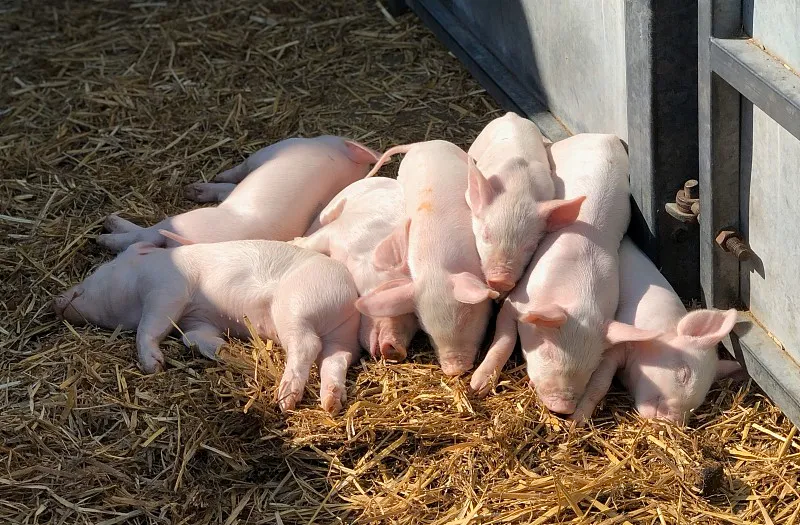
As temperatures fall across Asia, Africa and Europe, pig farms enter the most fragile period of the year. Cold stress, sealed houses, high humidity and heavier weaning pressure combine to suppress herd immunity — and that is exactly the window in which porcine teschovirus (PTV) does its quiet damage. Unlike explosive pathogens such as African swine fever or PEDV, PTV spreads without dramatic headlines: most infections are subclinical, yet the virus is closely linked to piglet diarrhea, poor growth and reproductive failure in sows. In autumn and winter, these silent losses add up to real money on every farm.
Why Autumn and Winter Amplify PTV Risk
PTV is a non-enveloped virus, which makes it comparatively stable in the farm environment and more tolerant of common disinfectants than enveloped viruses. In cold months, three management factors work in its favour: houses are closed and ventilation drops, effective stocking density rises, and day–night temperature swings put pigs — especially weaners — under continuous stress. Cold stress reduces feed intake and diverts energy away from immune function, while more pigs are housed closer together on wet, contaminated floors. Each factor increases the dose of virus a piglet swallows from feces-contaminated surfaces, boots, tools and water lines. That is why autumn and winter pig farming demands a tighter biosecurity and gut-health routine, not a looser one.
What Exactly Is Porcine Teschovirus?
Porcine teschovirus (PTV) belongs to the genus Teschovirus within the family Picornaviridae. It is a small, non-enveloped virus with a single-stranded, positive-sense RNA genome of roughly 7.1 kb. The virus was first described in Teschen (now in the Czech Republic) in the early 20th century, where it caused severe neurological disease — the historical reason Teschen disease is still used as a synonym for the neurotropic form of the infection. A severe PTV-1 outbreak with high mortality was last documented in Haiti in 2009, and PTV has since been reported across Europe, the Americas and Asia, including China, where the first isolate was recorded in 2003.
PTV is antigenically diverse. According to ICTV classification, 13 serotypes are recognised, and molecular studies have identified at least 19 subclades of Teschovirus A and 3 subclades of Teschovirus B, with natural recombinants also reported. Pigs and wild boars are the only known hosts. The main route of transmission is faecal–oral: infected pigs shed virus in feces, and healthy carriers are common — a key point, because it means a herd can look completely normal while still circulating virus.
From Silent Infection to Multi-System Disease
The clinical spectrum of PTV is unusually wide, which is exactly why it is so often missed on farm:
- Diarrhea. Watery diarrhea in suckling and weaned piglets is the most common field presentation. Virus can also be found in the feces of healthy pigs, so a positive laboratory result alone does not prove disease — it must be read alongside clinical signs.
- Reproductive failure. PTV has been associated with reproductive disorders in breeding herds, including returns to oestrus, small litters and increased perinatal loss. In practice, reproductive failure in sows is usually multifactorial, and PTV is one of the viral players to screen for alongside PRRSV, PCV2 and CSFV.
- Neurological signs. In the severe form, piglets show tremors, incoordination, paresis and paralysis. Milder "Talfan-type" disease with low mortality is far more common today.
- Respiratory and systemic involvement. PTV has been linked to pneumonia and pericarditis, and it is frequently detected together with other swine pathogens.
Because subclinical infection is the norm, the economic damage rarely appears as a single outbreak. It appears as a slowly rising weaning mortality rate, uneven litters, more fall-behind pigs and sows that return to heat for no obvious reason.
How Widespread Is PTV? Recent Surveillance Data
Three recent data sets explain why swine veterinarians are paying far more attention to this virus:
- In a 2026 study of diarrheic piglets on the Qinghai–Tibet Plateau (Ganzi, Sichuan), RT-PCR detected PTV in 46.5% of fecal samples (141/303). An isolate from that study reproduced severe watery diarrhea in 17-day-old piglets, with pulmonary haemorrhage and 40% mortality.
- A Guangdong surveillance study of 440 clinical samples from pigs showing diarrhea, respiratory or neurological signs found an overall PTV positivity rate of 19.32% (19.94% in feces), with seven genotypes circulating and PTV3 dominant. Strikingly, 97.65% of PTV-positive samples were co-infected with at least one of PCV2, PEDV, PCV3, PRRSV, CSFV or PDCoV.
- A 2022 case on a farm in Lanzhou, Gansu, reported severe diarrhea and respiratory distress in piglets with mortality above 60% in suckling piglets — a reminder that virulent variants still exist.
The take-home message for farm managers is simple: PTV is not a rare exotic pathogen. It is endemic, genetically diverse, and most dangerous when it stacks on top of piglet diarrhea pressure and other viral infections.
Diagnosing PTV Correctly
Because subclinical infection is the norm, diagnosis depends on laboratory confirmation. RT-PCR on feces or pooled tissues (liver, spleen, stomach, brain, intestine) is the standard approach, and VP1 sequencing is used for genotyping. Practically, every investigation of stubborn piglet diarrhea or a reproductive-failure storm should include PTV alongside PEDV, TGEV, PDCoV, rotavirus, PRRSV, PCV2 and CSFV — co-infection is the rule rather than the exception. Necropsy findings of enteritis, pulmonary haemorrhage or non-suppurative encephalitis support the diagnosis, but they are not specific on their own.
Prevention: Biosecurity Comes Before Treatment
There is no specific antiviral treatment for PTV, so swine disease control must be built on prevention:
- Terminal disinfection and water-line hygiene. Because non-enveloped viruses survive well in organic matter, cleaning must come first and disinfection second. VIBOV's VIRUCIDE is a broad-spectrum disinfectant designed for livestock houses, air and drinking water, with recommended dilutions for environmental disinfection, drinking-water sanitation and specific viral pathogens. Rotating footbaths and disinfecting tools, boots and transport crates close the routes that faecal–oral spread depends on.
- All-in/all-out and strict weaning hygiene. Empty-room downtime, dry-and-disinfect protocols and dedicated boots for farrowing rooms sharply reduce the viral dose newborn piglets meet in their first week.
- Colostrum quality and cold-stress management. Warmer, drier lying areas, fewer draughts and stable barn temperatures keep feed intake — and therefore immune competence — where it needs to be.
Supportive Nutrition: Cutting the Real Cost of Infection
Once PTV is circulating, management shifts to limiting losses: protecting gut integrity, preventing dehydration and carrying piglets through the critical first two weeks of life. This is where a structured feed additives for pigs programme makes a measurable difference.
1. Stop dehydration first. Diarrheic piglets lose water and electrolytes faster than they can replace them. PRO LYTE is formulated for the prevention and treatment of dehydration caused by diarrhea, restoring electrolyte and acid–base balance and providing instant energy during stress, weakness or transport — the single most cost-effective intervention in any diarrhea outbreak.
2. Protect and rebuild the intestine. VEP 10 promotes intestinal flora balance, improves feed utilisation and helps prevent and relieve diarrhea, while reducing stress responses to group transfer, transport and vaccination and supporting growth and reproductive performance. Probiotics Oral Solution complements it by improving immunity, adjusting gastrointestinal pH and optimising the intestinal environment.
3. Lift immunity and antibody levels. MULTIVIT SUPER supplies vitamins and amino acids, elevates antibody levels to build resistance to disease, and specifically enhances anti-stress capacity against weather change — precisely the challenge of an autumn cold snap.
4. Support liver and metabolic detoxification. LIV WELL is a liver tonic that stimulates liver metabolism, protects the liver and kidney from toxin damage and improves feed conversion — valuable when piglets are fighting both viral challenge and a secondary bacterial load.
5. Control secondary bacterial enteritis. PTV damages the gut lining, opening the door to E. coli and Salmonella. Coli-200 targets intestinal infections of swine caused by gram-negative bacteria, including yellow scour of newborn piglets, white scour and piglet paratyphoid, while NEOXYVITAM combines broad-spectrum antibiotics with vitamins and reduces the effects of stress caused by transport, temperature, vaccination and disease. Both should be used under veterinary direction and with attention to withdrawal periods.
Autumn/Winter Action Checklist for Farm Managers
- Screen every unexplained piglet diarrhea case for PTV and its common co-pathogens.
- Audit farrowing-house hygiene, water-line sanitation and boot-and-equipment disinfection this week.
- Tighten ventilation without sacrificing temperature stability, and measure ammonia levels.
- Start a rehydration and gut-health protocol at the first sign of scours — not after the mortality curve rises.
- Review sow records for returns to oestrus and small litters, and investigate clusters rather than single events.
- Keep vitamin, electrolyte and liver-support products in stock before the cold peak arrives.
The Bottom Line
Porcine teschovirus rarely makes headlines, but it quietly erodes piglet survival rate, growth performance and breeding-herd output — and autumn and winter give it every advantage. Farms that pair rigorous biosecurity with a proactive gut-health and immune-nutrition programme lose far less when the virus circulates.
VIBOV supplies a complete support line for PTV season — disinfectants, electrolytes, probiotics, vitamins and liver tonics — backed by 15 years of feed additive manufacturing experience and exports to more than 80 countries. Contact our technical team for a farm-specific protocol, or explore our full range of pig nutrition and health solutions.